Read Time: 6 minutes
Introduction:
This article is going to be close to my heart because I believe beauty is an extremely important quality for our society to cherish, and that should be reflected in our natural and regional building codes. This topic isn’t just an ideal; it’s a necessity for the modern world.
The Luxury Tax Myth & Modern Manufacturing:
This is often one of the most misunderstood things: when some demand beautiful places to live, the most common rebuttal is that it costs too much. This claim is like all claim ture to an extent; we can not afford to have everything crafted by hand or use the best materials, but beauty is mostly down to design and proportion. Now, thanks to modern technology, many things can be cut down in a factory and put together on site, which can massively save on cost.
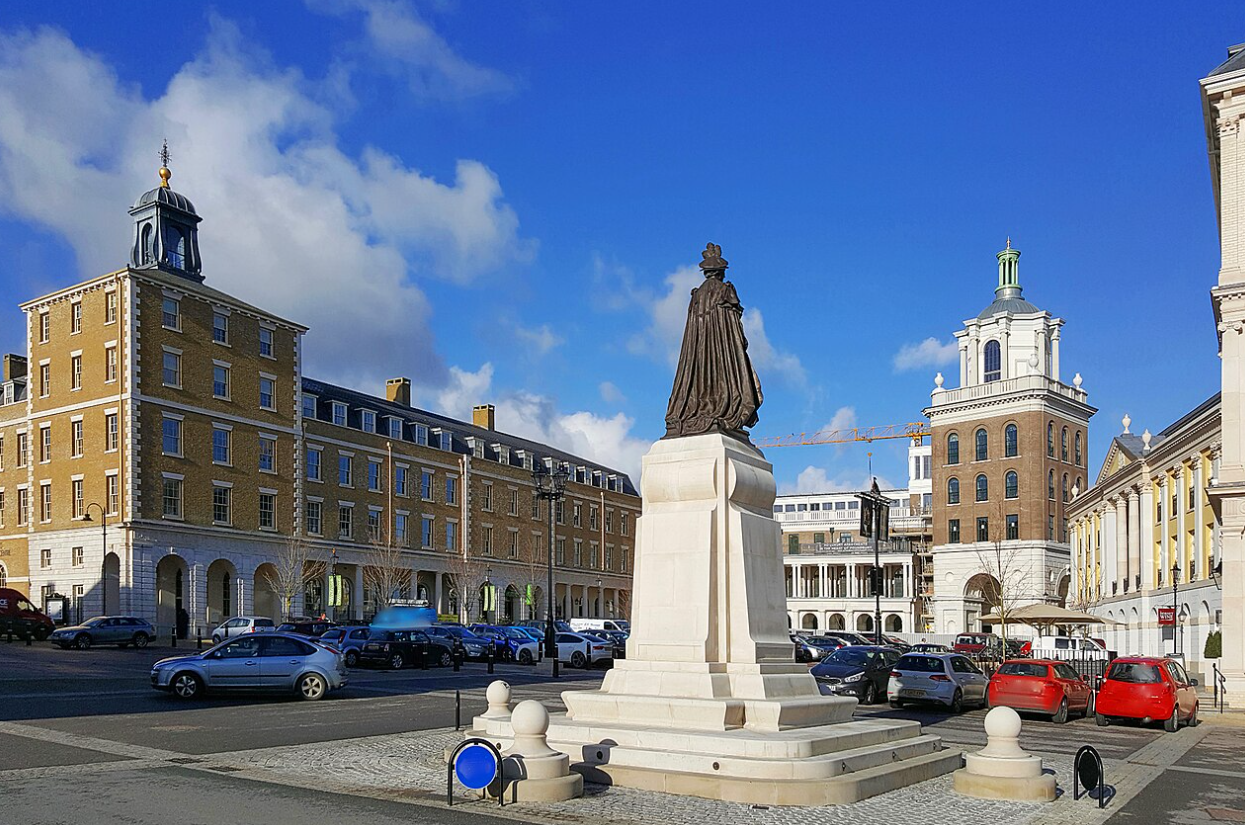
I accept we will need to make compromises, for example, tarmacked over cobbled streets or simplified designs, but this doesn’t mean we can’t live in wonderful communities. My favourite examples of this process are Poundbury, Nansledan and Le Plessis-Robinson. This is because many of these needed to make small sacrifices, but many were designated for the average person, not just millionaires. The best example is Le Plessis-Robinson; it used to be ugly and rough. Social housing was also at its highest, but they managed to beautify it.
The main problem is not that it is expensive to make, but that they are often so expensive due to supply and demand, worsened by housing crises because people would rather live in beautiful homes.
Some of the many practical solutions to bring back beauty include:
- Using more natural materials such as slate.
- Adding light decoration on buildings to break up flat surfaces.
- Creating variation in housing so every house doesn’t look the same.
- Utilising high-quality cladding when you can’t rebuild.
Designing for the Betterment of Society:
Now I want to lay out what I believe are the ideals for every town, city, and village. Even if not always possible in every case, these concepts should serve as our baseline for building communities, with beauty being the expression of our love for creation.
- Cutting out all semi-public places; this is because a space is more respected and utilised if it has a clear purpose, so there should only be clear public or private spaces. These places often attract crime and neglect because nobody feels responsible for them.
- Lower unnecessary regulations and costs around building, and improve the national/regional building codes to allow for beauty and the betterment of society to be considered. Limiting and enforcing new standards against temporary modernist mindsets helps the community’s overall image.
- Have car parks/driveways hidden close to buildings or well-integrated car parks; make places walkable/cycle and accessible within around a 15-20 minute radius.
- Add nature, such as trees, man-made green spaces, or anything that can help increase biodiversity of wildlife.
- 1/2 The ideal height for buildings is 2-6 stories; this is often considered the Goldilocks zone because it allows for population density without overcrowding, while avoiding expensive long-term amenities that come with taller buildings. This also allows beauty because taller buildings block sunlight and can sometimes feel intimidating to some people.
- 2/2 However, this rule should only be broken when there is no other choice, e.g. limited land, but there are ways to make stunning skyscrapers, though it is often overlooked, like in some east asian skylines or old new-york.
- Beauty and human dignity go hand in hand, so forcing those who struggle financially into ugly housing is a form of dehumanisation, as it strips away their dignity.
Fake Environmentalism & Stabialnity:
Next, fake environmentalism and lack of stability are often covered up by forest skyscrapers, built-in solar panels, or even claiming to use reinforced they are somehow making their project more environmentally friendly and stable. This is often purely for show.
Many modern buildings have a low life expectancy of around 50-150 years. How is this good for the environment or stability? Not only does it damage the housing market by cutting supply, but they also need to be replaced, which always causes some damage to the environment. Keep in mind that many buildings made before the modern age were made to last multiple generations. I believe the main problems are perverse incentives and refusing to see architecture as an art for good and acting as if it is a playground to mess with ugliness.
While countless more arguments could be made, such as poor building materials, the core truth remains simple. The reason why this matters isn’t just about helping the environment or the use of stability; if we refuse to treat buildings and the environment properly, it will naturally ruin the beauty of our homes.
The Corruption of the Mind:
If cheap construction degrades our streets over decades, the visual ugliness it leaves behind degrades our souls over time, leading to desensitisation. Just as sin/evils gradually desensitises your moral compass, living around ugliness causes us to copy it in our own lives and even come to accept it. Yet because true beauty is objective across all its variations, we know when we see it, as it moves us toward the good.
This also applies to the modern idea that everything needs to be efficient and fit modern trends; this is a mindset problem. For example, if more people choose to be single, that doesn’t mean we should mainly build more single apartments; overall, we just need to build a variety of buildings for the future that are open to all lifestyle paths. If we limit those paths to current trends, we end up penalising everyone long-term. This idea also leads to making contemporary design choices when building instead of making beautiful homes for all. The problem is artificial solutions to real problems.
Why Beauty Matters:
Ultimately, beauty matters because all humans are naturally attracted towards it, even if we can reject the gift with our free will. Beautiful towns are the future because it crates a society where we give basic dignity to all human beings, encourage stronger communities, and it shows we prioritise the long-term. If we don’t make beauty a priority, the future will be bleak.
In Catholic theology, beauty is often seen as an objective construct with different variations, which form its subjective element. However, like all things, beauty and its perfection can be distorted by individuals. It is ultimately meant to reflect God and His presence in the world, which is also an expression of love. Many of these points can apply to all people. This view is compatible with non-catholics as well, just without the religious terminology.
Conclusion:
Overall, beauty is a perfect expression of the heart of all creatures, man, and God. It is not an optional luxury, but a societal necessity, which is why all villages, towns and cities need beauty by rejecting modern ugliness.

Leave a Reply